Showing posts with label Baby care. Show all posts

Monday, December 19, 2022

How to find a best pediatric doctor in my area?

There are several ways to find a good pediatric doctor in your area:

  1. Ask for recommendations from friends and family members who have children. They may have a pediatrician that they trust and can recommend to you.
  2. Check with your insurance company. They may have a list of pediatric doctors that are covered under your plan.
  3. Research online and look for pediatric doctors that are highly rated by other patients. You can also check their qualifications and certifications.
  4. Call your local hospital or medical center and ask for a referral to a pediatric doctor.
  5. Consider the location of the doctor's office. It's important to find a pediatrician that is easily accessible to your home or work.
  6. Schedule a consultation with a few different pediatric doctors before making a decision. This will give you an opportunity to ask questions and see which doctor you feel most comfortable with.
Posted on 12/19/2022 10:05:00 PM / 0 comments / Read More

Friday, September 21, 2012

Why do my baby vomits frequently without any other symptom of illness?


Why do my baby vomits frequently without any other symptom of illness?

I just want to share a real Vomiting experience: We had an experience with our 2 and half year old girl baby that she was vomiting frequently. we had given her water to drink in between the vomiting periods. she didn't show any other symptom of illness other than the vomiting, so we had a guess that she should had swallowed any foreign body. we didn't want to wait and do further vomiting analysis because we thought that this could cause serious problems if we had not consult a doctor. so we went to a doctor to consult about baby vomiting problem and he took x-ray and then he concluded that there was nothing in her stomach and on food passage.

The real problem for the vomiting was the excess quantity of water that she drunk before the vomiting, water in the stomach had triggered excess vomiting and we kept feeding her water further and again and again so she had vomited it. this was the main problem for the Vomit without any other symptom of illness.

Though I explained my experience about the reason for vomiting, there could possibly be many other reasons for vomiting. To understand and save our baby we need to be cautious that we always need to consult a doctor.


Posted on 9/21/2012 12:22:00 AM / 0 comments / Read More

Thursday, January 5, 2012

ARE VACCINES COMPLETELY SAFE ?


No vaccine is totally free of risk, but the benefit of immunization vastly outweighs the risk for
almost every child. However, a baby shouldn’t be immunized during a feverish illness; postpone it until she is completely recovered. Also, talk to your doctor or pediatrician before the immunization if your child has had a serious reaction to a previous injection; has a severe egg allergy; has had a seizure or convulsion; is having treatment for cancer; or has any disease that affects her immune system. Vaccines often have side effects, such as fever and crying or irritability in the first 24–48 hours after the injection. There may also be redness or soreness at the injection site and a lump that can last several weeks. Some vaccines have other effects; for instance, MMR (measles, mumps, and rubella) can produce a raised temperature or even a mild rash 10 days later.
Posted on 1/05/2012 11:54:00 PM / 0 comments / Read More

How to Choose Baby Care Products: Better Care of Little Ones


You must be amazed to know that the baby care products contribute towards a million dollar industry. Numerous manufacturers around the world supply products like baby soaps, baby skin creams, baby shampoos, baby powders and baby diapers to the market. However, it is equally surprising to know that many of these products need to be discarded.
Many research works and studies have thrown light on the harmful ingredients and materials that have been used in some of these products. If you have a baby product store, you must consider it as a responsibility to supply safe baby products to the parents. Here is a discussion about baby care products that actually help in taking good care of the young ones.

No Talcum for Baby Rash
Few years back, talcum powders were quite popular among parents to cure baby rash caused by the use of baby diapers. However, many of these products have been found to cause respiratory issues. It is suggested to buy powders that contain natural and herbal ingredients as they are free from side-effects and take better care of the baby skin.

Shampoos with Healthy Scents
Shampoos that contain synthetic scents are no more worthy for the health of the little ones. These products are actually allergic to the soft and sensitive skin of the babies. You must choose baby shampoos that contain natural components for producing scents. Going further, unscented shampoos are also available in the market if you are not too inclined towards scents.

Aloe Vera Soaps
Aloe Vera is no hidden secret when it comes to the maintenance of skin health. The baby care product manufacturers have started using this wonderful natural ingredient in organic baby soaps. Aloe is also used in other baby care products like skin creams and in remedies used for treating rash caused by baby diapers.
Natural Oils and Moisturizers
A number of baby oils and baby moisturizers few years back used mineral oil as the main ingredient. The oil has been proved to be harmful for health, particularly for baby skin. As a result, the focus has been shifted to prepare products using natural oils like those obtained from chamomile and sunflower.

Organic Cotton Diapers
The baby diapers prepared from synthetic materials are slowly being withdrawn from the lists of baby care products. These diapers have been held responsible for causing discomfort to babies and pollution to the environment. You should look for baby diapers that are made from certified organic cotton and other such organic materials.

Check for Chemicals to Avoid
Certain chemicals used in baby products have been declared as unsafe. These include octinoxate, polyethylene glycols, triclosan, ceteareth and diethyl phthalates among many others. You should always check for the ingredients before choosing baby care products to avoid choosing products containing these harmful chemicals.
There are organic baby care product manufacturers around the world that can be easily found on the internet using business directories. Obtaining safe baby products from them should bring more customers to your store.


Posted on 1/05/2012 10:36:00 PM / 0 comments / Read More

Thursday, December 15, 2011

My baby sleeps during the day and stay up all night long


Posted on 12/15/2011 04:40:00 PM / 0 comments / Read More

Is your child obese

Posted on 12/15/2011 02:40:00 PM / 0 comments / Read More

Important points for the care of your Newborn baby:

Important points for the care of your Newborn baby:
  • Aim for direct skin-to-skin contact with your baby soon after birth. The first yellowish breast milk (colostrum), though produced in small about, is enough to meet the needs of your baby.
  • A crying baby may need body contact. Pick her up; don’t worry about spoiling her.
  • Bathe a newborn with plain lukewarm water for the first 7 to 10 days of life. Soap and oil may be used later. There is no need to buy medicated soaps and expensive baby soaps and oils. In fact, some babies may develop skin rash with their use. Any non-scented bath soap and a locally preferred oil like till (sesame) oil, coconut oil, groundnut oil or mustard oil is adequate. There is no need to go in for almond or olive oil. Talcum powder, including special baby powder, irritates a baby’s nostrils and can cause severe lung disease. At times, it gets caked in the skin folds. Avoid using all types of powders. If you fee you must use it, restricts its application to the nappy area or where the skin tends to chafe, never buy prickly heat powders; they are often medicated and unsafe for babies. Some children get skin rashes with gram flour or Milk cream. In general, we do not recommend their application.
  • Do not try to push the foreskin of a male child’s penis to separate it from the soft front portion. It is meant to protect the delicate part of the penis.
  • Do not put oil into the ears and nostrils of the newborn. Oil, if aspirated into the lungs, can be dangerous. The baby’s nose may sometimes be obstructed by thick secretions. These should be moistened with cotton soaked in water and then removed gently with a clean cloth. Do not clean the tongue and mouth of a baby. Avoid pacifiers (dummies); besides interfering with proper feeding habits, pacifiers increase the risk of infections (including middle ear infections) and malocclusion of the teeth.
  • Never use ear buds or cotton buds for the baby. After a bath, use a corner of the towel to clean the external ear. The wax normally found in the ear canal protects it. Do not try to remove it. Also, do not blow into the baby’s ears after a bath.
Share
Posted on 12/15/2011 12:54:00 PM / 0 comments / Read More

Wednesday, December 14, 2011

CHILD IMMUNIZATION

WHAT IS IMMUNIZATION ?
This is giving a vaccine by mouth or injection to make a child resistant to a specific
virus or bacterium. The diseases your child will be immunized against are infectious
and unpleasant; some are fatal, while others may cause permanent disability.
What illnesses can be vaccinated against ?
Your child usually needs immunization against the following diseases. In areas where tuberculosis (TB) is common, children are given a tuberculin skin test and, if it is positive, a chest X-ray. Polio (poliomyelitis) A virus that affects the nervous system and can cause permanent paralysis, or even death if it affects the chest muscles. Diphtheria A serious throat infection that can spread to the heart and nervous system. Tetanus A potentially fatal bacterial disease that can paralyze the muscles, causing painful spasms. Pertussis (whooping cough) A bacterial illness that causes persistent severe coughing, and can result in vomiting, convulsions, and lung damage. Hib (Haemophilus influenzae b) A bacterial infection that causes a range of serious illnesses, including meningitis and pneumonia. Chickenpox A virus that produces a rash of blisters; may lead to pneumonia and encephalitis. Measles A virus that can cause chest infections, convulsions, and permanent brain damage. Mumps A viral infection that can cause painful inflammation of the salivary glands. It can affect the nervous system and cause meningitis. Rubella A virus that produces a rash and fever, but causes serious birth defects in unborn babies. Hepatitis B A virus that causes liver disease. Pneumococcal meningitis A bacterial form of meningitis linked with septicemia and chest and ear infections. Can cause long-term complications.

When will my child be vaccinated? 

The American Academy of Pediatrics and the American Academy of Family Physicians recommend the following schedule:

  • Birth Hep B #1 (hepatitis)
  • 2 months Hep B #2; DTaP (diphtheria, tetanus, pertussis); Hib (Haemophilus influenzae); IPV (inactivated polio vaccine); PCV (pneumococcal vaccine)
  • 4 months DTaP; Hib; IPV; PCV
  • 6 months Hep B #3; DTaP; Hib; IPV; PCV
  • 12–18 months DTaP; Hib; PCV; MMR #1 (measles, mumps, rubella); varicella (chickenpox)
  • 4–6 years DTaP; IPV; MMR #2.


The Canadian Paediatric Society recommends the following schedule:
  • Birth Hep B #1 (hepatitis—may be administered in infancy or preadolescence)
  • 1 month Hep B #2
  • 2 months DaPTP-Hib #1 (diphtheria, pertussis, tetanus, polio [given orally as IPV in some provinces], Haemophilusinfluenzae); pneumococcal vaccine #1; meningitis C vaccine #1
  • 4 months DaPTP-Hib #2; pneumococcal vaccine #2; meningitis C vaccine #2
  • 6 months DaPTP-Hib #3; pneumococcal vaccine #3; Hep B #3; meningitis C vaccine #3
  • 12–15 months MMR #1 (measles, mumps, rubella); varicella (chickenpox); pneumococcal vaccine #4
  • 18 months DaPTP-Hib #4
  • 4–6 years DaPTP; MMR #2.
Posted on 12/14/2011 07:29:00 PM / 0 comments / Read More

Saturday, May 7, 2011

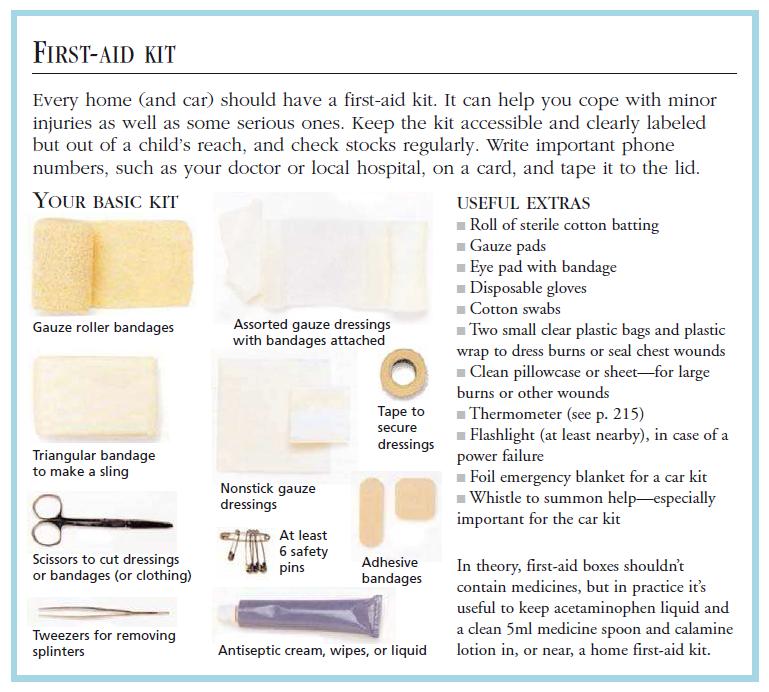
BABY'S FIRST-AID KIT


Preparing the first aid kit for your baby is very essential because the first aid kit is very useful in case of any unexpected injuries to the baby.

Here is the list of essential items that a baby needs in his/her first aid kit:

1. Acetaminophen for your children in liquid form

You can find acetaminophen for your children in both liquid and dropper form. The dosages are different for both the forms. You need to read the labels carefully in order to administer correct dosage.

Don't try to give aspirin for your baby if you suspect any viral infection, because it has been concerned as one of the causes for Reye syndrome. You can use ibuprofen to reduce the fever. It is better to consult your pediatrician for correct dosage of medications.

2. Essential baby oils and baby lotions. It can be an optional choice.

3. Cream for diaper rash

Clean the diaper area thoroughly and then apply the cream as indicated on the package or as recommended by your pediatrician in order to care for the irritated areas against urination. If you apply the cream without properly cleansing the area, then it can seal the irritants against your baby's skin.

4. Rubbing alcohol. This can be very helpful for cord care.

5. Nasal aspirator.

6. Ipecac syrup.

This syrup is particularly useful whenever your child swallows potentially poisonous substances. But, don't use this for your child without your doctor's prescription.

7. Cotton balls.

Don't use cotton swabs in cleansing your baby's ears or skin. Sometimes swabs can cause infection and puncture eardrums.

8. Rectal thermometer.

9. Baby scissors that have rounded points.

10. Petroleum jelly

11. Diaper pail along with a disinfectant. This can be useful if you use a cloth diaper.

12. If you use disposable diapers, then use plastic garbage bags in order to line the diaper pail.

13. Diaper liners are very helpful for you in the early weeks if you launder diapers at home.

14. Baby shampoo.

15. Baby washcloths.

16. Bath towels.

17. Baby brush or comb.

18. A vaporizer, a cool mist type. It is an optional one.

19. Baby soap.

It is better to use liquid soaps, because they are easy to use even with one hand. Use mild or nondrying soaps.

20. Baby wipes, as they can be essential during the travel. But, sometimes they can irritate your baby's skin, if he/she has very sensitive skin.

21. Baby decongestant for blocked nose. This can be used only for the babies of above 3 months age.

22. Arnica cream for treating bumps and bruises.

23. An oral syringe calibrated with milliliter (ml) markers to measure and administer liquid medicine. Don't use household spoons to give medications for your infants.

24. Adhesive bandages in different sizes.

25. Saline drops to loosen the mucus in a stuffy nose.

Posted on 5/07/2011 11:33:00 AM / 0 comments / Read More

Child growth by month

Posted on 5/07/2011 11:32:00 AM / 0 comments / Read More

MAJOR BABY DEVELOPMENTAL MILESTONES


CHILD DEVELOPMENT

Q:WHY DO SOME BABIES DEVELOP FASTER
THAN OTHERS ?
A: It’s not always clear why some babies progress
more quickly. The trend may run in the family;
a toddler who is late learning to walk may have a
parent who was also a late walker. The timing is
much less important than many parents think.


Q:DOES IT MATTER IF MY CHILD IS LATE IN
REACHING DEVELOPMENT MILESTONES ?
A: Probably not. The ages given below are only
average, so many babies will be later and many
earlier in reaching certain stages. Also, assessing
your baby’s progress depends not only on what he
is doing, but on how well he is doing it.


Q:WHAT IS HAPPENING PHYSIOLOGICALLY
AS MY BABY DEVELOPS ?
A: Development depends on the maturity of
your baby’s nervous system—his brain and his
nerves. A sheath of myelin around each nerve
makes it conduct impulses faster, but at birth many
nerves don’t yet have myelin, so a newborn’s nervous
system isn’t fully formed. Nerves outside the brain
can take up to two years to develop a complete
myelin sheath, which is one reason why toddlers
lack coordination and why you can’t toilet train
your child until he is around two years old, when
his neural development will enable him to control
bladder and bowels. The nerves within the brain
are not fully myelinated until he reaches adolescence.


Q:WHAT IS HAPPENING PHYSIOLOGICALLY
AS MY BABY DEVELOPS ?
A: Development depends on the maturity of
your baby’s nervous system—his brain and his
nerves. A sheath of myelin around each nerve
makes it conduct impulses faster, but at birth many
nerves don’t yet have myelin, so a newborn’s nervous
system isn’t fully formed. Nerves outside the brain
can take up to two years to develop a complete
myelin sheath, which is one reason why toddlers
lack coordination and why you can’t toilet train
your child until he is around two years old, when
his neural development will enable him to control
bladder and bowels. The nerves within the brain
are not fully myelinated until he reaches adolescence.


Q:WHAT IS HAPPENING PHYSIOLOGICALLY
AS MY BABY DEVELOPS ?
A: Development depends on the maturity of
your baby’s nervous system—his brain and his
nerves. A sheath of myelin around each nerve
makes it conduct impulses faster, but at birth many
nerves don’t yet have myelin, so a newborn’s nervous
system isn’t fully formed. Nerves outside the brain
can take up to two years to develop a complete
myelin sheath, which is one reason why toddlers
lack coordination and why you can’t toilet train
your child until he is around two years old, when
his neural development will enable him to control
bladder and bowels. The nerves within the brain
are not fully myelinated until he reaches adolescence.


Q:MY BABY WAS BORN PREMATURELY. WILL
THIS AFFECT HIS DEVELOPMENT ?
A: Prematurity will not slow down his rate of
development, but you must make allowances
for the fact your baby has started life at a different
point. If, for example, he was born six weeks early,
this means at three months his development may be
more like that of a six-week-old. By the age of two
years, there should be no difference between children
who were born prematurely and those who weren’t.


Q:MY BABY WAS BORN PREMATURELY. WILL
THIS AFFECT HIS DEVELOPMENT ?
A: Prematurity will not slow down his rate of
development, but you must make allowances
for the fact your baby has started life at a different
point. If, for example, he was born six weeks early,
this means at three months his development may be
more like that of a six-week-old. By the age of two
years, there should be no difference between children
who were born prematurely and those who weren’t.


BRINGING OUT THE BEST IN YOUR CHILD

Q:HOW CAN I BRING OUT THE BEST IN MY
CHILD AS HE DEVELOPS ?
A: The key is to attend to your child’s emotional
needs as well as his physical ones. All children
thrive best in a secure environment that offers
them plenty of love. There will be testing times,
but try not to lose your patience, criticize unduly,
or be sarcastic. It’s far better to praise him so that
he grows up in an atmosphere where he feels at
ease with himself. Whenever you can, reward your
child with attention, not candy or presents. This is
better than punishing him when he does go wrong.
He will often get things wrong, but he has to know
that it’s all right to learn from his mistakes.


Q:HOW CAN I ENCOURAGE MY CHILD’S
DEVELOPMENTAL PROGRESS ?
A: Spend time doing things with your child
rather than ignoring him to concentrate on
things you want to do. Have conversations with
him all the time about anything, and take his
questions seriously. When he’s about three years
old, he’ll probably ask endless questions, most of
them beginning with “Why?” Always answer as
best you can. Curiosity is the sign of an active
mind, and you may find that soon he asks you
things you need to look up in order to answer.
Find the explanation together in a book or on the
Internet, even when your child can’t yet read. A
love of learning is vital and you’re his first and most
natural teacher. Give him an interest in books and
read to him from early on. If you and your partner
read for pleasure, your child will see the satisfaction
it brings, and he’ll be happy to copy you.


Q:ARE SOME PERIODS MORE IMPORTANT
FOR DEVELOPMENT THAN OTHERS ?
A: Yes. There may not be well-defined periods
with sharp cut-off points, but there are
windows of opportunity or times when your baby
or child is most ready to acquire a certain skill.
For instance, there’s a window of opportunity at
around eight months when a baby is ready to
chew. So, if you continue to feed him only milk
and sloppy mixtures, he’ll take much longer to
learn to deal with chunks of food. However, it is
rather misleading to think of certain critical periods
because all of childhood is critical to your child’s
development. You only pass this way once with
your child, so be sure to make the most of it
.

Q:IS THERE ANYTHING I CAN DO TO SPEED
UP MY CHILD’S DEVELOPMENT ?
A: No, and you shouldn’t try. You can’t teach him
to walk sooner than nature intended, or to do
anything else until he is ready. With the use of
flash cards and other fast learning methods, your
child may pick up one or two skills that by
repeating he will learn to do automatically.
You may even be able to teach him to write in
this way. However, until he’s old enough for real
understanding, these are little more than party
tricks. There isn’t a useful way of accelerating his
progress—by putting pressure on a child, you can
do more harm than good and may even discourage
him from learning in the long run.


Q:WILL THE SPEED OF HIS DEVELOPMENT
DEPEND ON HIS INTELLIGENCE ?
A: Partly, but not entirely. The link between
development and intelligence is not a simple
one and it’s made more complicated by being a
sensitive issue among educators. Babies and
children who are intellectually disadvantaged are
often slower in several spheres of development
because some skills demand some degree of
intelligence in their acquisition. But the arrow
doesn’t go both ways—you can’t pinpoint a
superior intellect simply from the age at which a
baby passes certain developmental milestones.
There is a definite link between speech
development and intelligence in the sense that a
low IQ (intelligence quotient) can delay speech
acquisition, but late speech does not necessarily
mean that a child is intellectually backward.


Q:WHAT FACTORS MAY AFFECT MY
CHILD’S INTELLIGENCE ?
A: Intelligence is hard to predict as well as
difficult to define. We can all think of people,
both adults and children, who are academically
able but lack emotional maturity. If you measure
intelligence simply with an IQ test, statistically,
the first-born child is likely to be slightly more
intelligent than his younger siblings. In larger
families, especially those in which there are only
short gaps between successive children, the average
intelligence tends to decrease by a few points
with each child. Children tend to inherit the
intellect of one or both parents, but it’s wrong to
expect a child to be just like you.


Q:HOW CAN I MAXIMIZE MY CHILD’S
OPPORTUNITIES FOR LEARNING ?
A: Let him play—it is vital to his learning. All
toys are educationally useful, but some—such
as play mats and play gyms incorporating an array
of textures, sorting and pairing toys and games,
puzzles, jigsaw puzzles, and books—are more
valuable than others. Babies and young children get
bored easily, so try to vary the selection of playthings
available. As soon as your child is interested, teach
him colors as well as the similarities and differences
between everyday things.


Q:WILL PRACTICE HELP MY CHILD
DEVELOP HIS SKILLS ?
A: Yes. Young children enjoy practicing what they
have just learned and it is useful for them to
do so, since repetition establishes the new skill more
firmly. Let your child scribble and paint as much
as he wants, dress himself, or help you make lunch,
but never force your child to practice.

Q:I WORK FULL TIME, SO HOW CAN
I HELP MY CHILD’S DEVELOPMENT ?
A: Establish a daily routine with your child’s
caregiver. The environment she provides has to
be acceptable to you, but not identical to that which
you would provide. Variety of experience enriches a
child’s emotional and social development. When
you’re not working, spend time with your child. As
a working parent your contribution to your child’s
development will be slightly different from that of a
parent who is at home full time, but if you get the
balance right, your contribution can be as valuable.


Q:COULD CONFLICT AT HOME SLOW MY
CHILD’S DEVELOPMENT ?
A: Yes. Any threat to a child’s sense of security
will affect him. Emotional stability is vital to
development in all areas, so if you and your partner
disagree, it is extremely important that you make
the effort to shield your child from the conflict.


Q:COULD POOR LIVING CONDITIONS
AFFECT MY CHILD’S DEVELOPMENT ?
A: They may. Children from less affluent or more
crowded homes tend to do less well in terms
of development. It’s not the money that counts but
the food, housing, heating, playthings, and time
that it buys. If you are struggling to provide for
your family, you may be short of time and energy
to give to your children. Many parents manage to
overcome this with dedication and ingenuity.


KEY DEVELOPMENT CHECKS
---------------------------------------------

These checks assess how your child
is growing and developing, and screen
for a variety of medical conditions,
including heart disease, congenital
hip dysplasia, and strabismus, so that
they can be treated at an early stage
before symptoms affect your child’s
progress. Use these checkups to ask
your doctor or pediatrician about any
concerns you may have.

What checkups will my child have ?

Your child will be examined soon after birth
and then at regular intervals throughout
childhood. He may be asked to do particular
tasks or to talk about something as well as
having a medical examination.
Does missing a checkup matter if I think my
child is generally developing well ?
Yes. There are conditions, such as heart disease,
hip dysplasia, and undescended testicles, which
are almost impossible for a parent to pick up at
a time when treatment would help most.

What if my child is unwell or won’t
cooperate on the day ?

It doesn’t matter if your child has a minor
illness, such as a cold. However, reschedule the
checkup if he has a feverish illness, or has an
infection (such as rubella) that could affect
others at the doctor’s office. Sometimes babies
and toddlers are uncooperative because they are
hungry or tired. Feed your baby before the
checkup, but don’t worry if he’s a little grumpy.
Your doctor may be able to do some of the
checks and leave the rest for another day.

How accurate are screening examinations ?

You can’t rely 100 percent on any screening
procedure, but having them done maximizes
the chances of any medical condition being
picked up at the earliest possible stage.
However, a doctor can miss a problem such as
congenital hip dysplasia even if your baby has all
his checkups at the right time. Talk to your
doctor or pediatrician about any concerns that
arise between checkups.


Posted on 5/07/2011 11:31:00 AM / 0 comments / Read More

WHAT CAN MY BABY DO AT SIX WEEKS OLD

Posted on 5/07/2011 11:30:00 AM / 0 comments / Read More

HOLDING YOUR BABY

Posted on 5/07/2011 11:29:00 AM / 0 comments / Read More

WHAT WILL MY NEWBORN BABY LOOK LIKE

Posted on 5/07/2011 11:27:00 AM / 0 comments / Read More

Friday, May 6, 2011

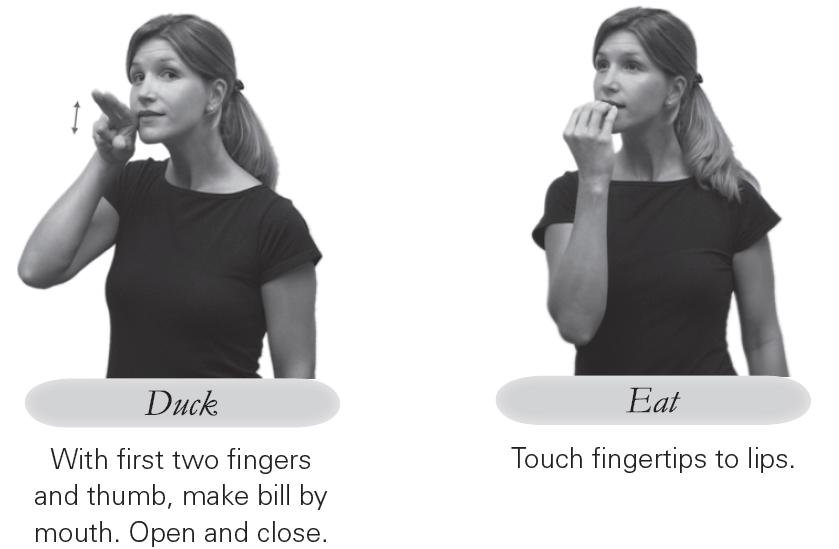
Speak to your Baby - Baby Signs

WE FREQUENTLY HEAR FROM PARENTS WHOSE
sweet, easy-going nine-month-old has suddenly turned into a demanding and
easily frustrated twelve- to eighteen-month-old. We used to blame this transformation
vaguely on the “terrible twos” (despite the fact that it’s the highly unusual
child who waits until age two). Much of the tantruming we see in the second
year results directly or indirectly from children not being able to communicate.
Just as is true for all of us, not being able to let people know what they need,
feel, or think about leaves children extremely frustrated. Unlike us, however,
they are left with few alternatives but to scream louder and cry harder.

Now parents don’t need to simply endure this difficult time. Thanks to Baby
Signs, and the two decades of carefully conducted research upon which it is
based, parents finally have a wonderful tool to help their children who want so
badly to communicate but whose vocal skills have not developed enough to do
so. Like an increasing number of pediatricians around the country, I strongly
encourage parents to use the Baby Signs program. Just as we have learned that
nursing is important for nurturing your baby’s body, we now know that signing
is important for nurturing your baby’s mind and heart.


Posted on 5/06/2011 02:07:00 PM / 0 comments / Read More
 
Copyright © 2011. Parents and Child health care . All Rights Reserved
Home | Company Info | Contact Us | Privacy policy | Term of use | Widget | Site map
Design by Herdiansyah . Published by Borneo Templates